Wood Guide

The vast majority of our chess sets are wooden. We describe very accurately which woods are present in each set. Below is a detailed description of each type of wood that is found in our chess sets.

Sheesham Golden Rosewood

Sheesham is a very common wood used in the making of chess sets. It's a medium brown colour and is reasonably dense. When polished or waxed it can develop very attractive figuring and grain.

sheesham

It is a stable wood that can be used to make chess pieces, chess boards and folding chess sets. It's not a hugely expensive wood and is available in large quantities. Some chess companies refer to this wood as "Golden Rosewood" which is actually quite confusing.

Boxwood

Boxwood is a light coloured wood that is used to make chess pieces and squares on chess boards.

boxwood

It is seldom used to make whole chessboards however. It is a dense wood that is robust and ages nicely. Boxwood comes in various grades and can be seen on chess sets at opposite ends of the price and quality scale. It comes from a tree that is aptly named the “Boxwood Tree”.

Ebonised Boxwood

Ebonised Boxwood is a stained version of Boxwood. Because Boxwood is cheaper than Ebony it is used as an alternative to real Ebony.

ebonised boxwood

It is commonly used to make chess pieces, the black side obviously; a very convincing attempt at producing an Ebony effect. It makes for attractive deep black chess pieces.

Walnut

Walnut is a wood rich in red, purple and yellow tones and is mostly used for borders and squares on chess boards. An incredibly popular wood for aesthetic construction and furniture, it has a tight grain with beautiful figure variation.

walnut

It is a medium, dense wood that is robust, thus making it very suitable for chess boards. There are various versions of Walnut wood, American Walnut being the most popular.

Wenge

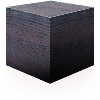
Wenge is a very dark wood that is very close to natural ebony but has an almost purple-blue hue in certain lighting conditions. Wenge is used exclusively for chess board construction and is considered a more cost effective and sustainable alternative.

wenge

Wenge has an intriguing grain that is incredibly tight and almost geometric in appearance and is sometimes mistaken as a manufactured, printed effect. The colouring is also similar to dark Indian Rosewood, making Wenge boards perfect for accompanying Rosewood, Sandalwood and Ebony pieces. A contemporary wood choice, it is also found in modern kitchen worktops and designer furniture.

Ebony

Ebony is classed as a luxury wood. Considered by many to be “the” black wood, it is in fact a chemical process that makes it completely black.

ebony

In its natural state it is a dark brown with light streaks within the grain. This looks very attractive and some chess boards are made using semi-treated ebony to retain this effect. Commonly used in luxury chess pieces, Ebony is a fine, hard wood. Revered by musicians for its tonal qualities, it is used extensively in high-end guitars and violins.

Rosewood

Rosewood is another luxury wood. Another favourite of musical instrument makers, it has found its way onto numerous guitar fingerboards to excellent effect.

rosewood

Rosewood is a rich dark wood with a slightly red tinge to it. It is used in the production of medium to high-end chess pieces and is also found in some chess boards and folding sets.

Bud Rosewood

Bud Rosewood is wood that has been sourced from the base of the Rosewood tree. It is considered to be of much higher quality than normal Rosewood.

bud rosewood

Expect to find Bud Rosewood in high-end chess pieces.

Palisander

Palisander is a type of Rosewood that is used primarily for chess boards and cases. Usually slightly lighter in tone than classic Indian Rosewood, it retains the dense grain that is slightly more uniform in direction.

palisander

Palisander comes in various tones of deep red and can be seen on chess sets at opposite ends of the price and quality scale.

Redwood

Redwood is similar to Rosewood in many ways. It has an even stronger red tint to its grain and has the added benefit of being more durable than Rosewood.

redwood

Much confusion lingers thanks to an adulteration of the term Redwood. Some will pass off Rosewood as Redwood. They are in fact different woods from a different tree. Redwood is seldom used to make chess boards and cabinets but is often used to make high quality chess pieces.

Red Sandalwood

Red Sandalwood is a highly valuable and versatile wood. Used as a traditional medicine and as a dye when powdered, it also makes for stunning and beautiful chess pieces.

red sandalwood

Only seen in high-end expensive chess sets, it has a lovely deep red colour and a fine dense grain. Prices of this wood are high, mainly due to its superb quality and high demand for its uses.

Briar

Briar wood or Briar root wood is a medium red/yellow coloured wood that is exclusively used for luxury chess boards and chess piece cases. Briar has distinctive grain that curls and twists and is quite beautiful.

briarwood

Because of this, Briar has been used for crafting smoking pipes and other ornate objects for centuries. A luxury, dense wood, it is favoured by luxury Italian chess board makers.

Birch

Birch is another of the medium-grade woods that is very versatile. It is used to make everything from wooden toys to tooth picks and even paper.

birch

Naturally pale in colour, it is favoured by woodworkers and craftsmen for its close grain. It cuts well when dry and takes a stain well. Birch becomes very stable only when dry and can lose up to 15% of its mass during the complete drying process. The Birch tree grows in most parts of the world, including Europe, and is used by European chess manufacturers to make medium-priced chess sets.

Maple

Maple is a hard light wood that in some cases can be almost white. Often used to create the white squares of a chess board, its light colour contrasts well with a deep black Ebony to create a striking chess board.

maple

A stable wood that is available in abundance in certain parts of the world, it is rare to see chess pieces made from Maple, mainly due to the popularity of Boxwood.

Erable

Erable is a variety of Maple; in fact “erable” means “Maple” in French. Erable is light in colour and has a rich quilted grain which lends itself to being stained in a variety of colours.

erable

Our bold coloured chess boards in green, blue, grey, cocoa and red are all made from Erable wood.

White Wood

White wood is a light coloured wood similar to pine. It is lightweight and quite soft compared to the other woods described here.

white wood

It is not dense or hard enough to turn into chess pieces. It is however used to form the frames of folding chess cabinets on lower priced sets.

Beech

Beech is an extremely versatile wood. It is naturally quite pale in colour with clean grain lines running through it.

beech

The Beech tree grows in a variety of places, including Europe, so it is not uncommon to see European chess manufacturers using it in their chess sets. It is also the wood of choice for burning to create smoke to cure meats and cheeses. A little-known fact is that chippings of Beech wood are used in the process of making Budweiser beer. It is used as a stable solid wood to make everything from pepper grinders through to furniture. Expect to see Beech products stained a variety of different colours. It is an ideal material for chess boards and can also be used to make chess pieces when required.

Mahogany

Mahogany is a rich hardwood with deep red colouring to it. It starts off looking slightly orange or pink when first harvested but becomes a lovely deep red/brown colour once it has seasoned.

mahogany

In some parts of the world it is becoming very rare and valuable. It has traditionally been the wood of choice for luxury cabinet and furniture makers. It has a dense grain pattern and a solid structure that does not suffer heavily from voids and knots. It also has its place in the manufacture of fine musical instruments, which is a testament to its stable tonal qualities. Sometimes used as either a veneer or in solid form to make chess boards but seldom chess pieces.

Hornbeam

The Common Hornbeam tree grows in most European countries and can be seen as far east as Russia and the Ukraine. It is a common tree in the UK and grows best in areas that are at least 600 meters above sea level.

hornbeam

The wood from the Hornbeam is heavy and hard with a light colouring and fine grain. It has been used for many purposes including tool handles, snooker cues, parquet flooring and of course chess sets. It is not favoured by all woodworkers because its hardness requires extensive tooling to manipulate effectively. Hornbeam wood is used regularly to make chess sets in Europe and Russia but rarely used in Asia; its dense structure is very hard-wearing, which results in wooden products that will stand the test of time.

Our unique tool uses AI to show you chess sets that are right for you.

Describe what you're looking for...

Try: Staunton set for 50 cm board Luxury gift under £200
Press ENTER to search.